ESP32 Sonar Cabinet Lighting Controller
Overview
This ESP32-powered cabinet lighting system automatically illuminates your cabinets when doors are opened using a sonar sensor for detection.
It features RGBW LED strips with customizable colors, brightness, and threshold settings through a responsive web interface, plus OTA updates for easy maintenance.
Features
‣ Motion-Activated Lighting
- Uses HC-SR04 sonar sensor to detect cabinet door opening
- Filtered detection with rolling buffer to prevent false triggers
- Automatic on/off based on configurable distance threshold
‣ RGBW LED Control
- Full RGBW color control via web interface
- Real-time color sliders with live preview
- Configurable number of LEDs (1-300 supported)
- SK6812 RGBW strip compatibility with proper color mapping
‣ Web-Based Control Panel
- Responsive dark-themed UI accessible from any device
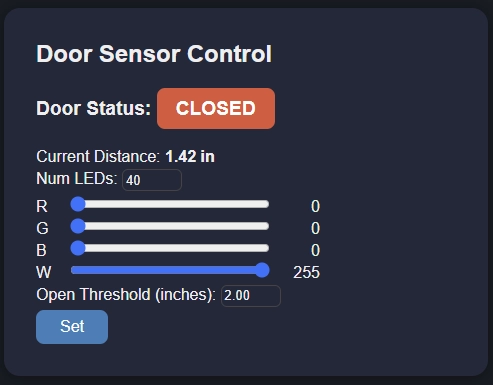
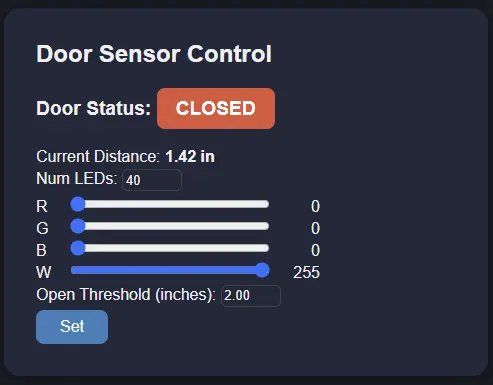
- Live door status monitoring (Open/Closed)
- Real-time distance readings in inches
- Adjustable threshold sensitivity for different cabinet sizes
‣ Smart Connectivity Features
- WiFi auto-reconnect with visual LED status indicators
- Over-The-Air (OTA) updates for remote code deployment
- JSON API endpoints for integration with home automation
‣ Robust Operation
- Connection monitoring with automatic WiFi recovery
- Visual status feedback using LED colors (red for disconnected, green for connected)
- Debounced sensor readings to prevent flickering
Tech Stack
- ESP32 → Core microcontroller with WiFi
- HC-SR04 → Ultrasonic distance sensor
- SK6812 RGBW → Addressable LED strips
- Adafruit NeoPixel → LED control library
- ESPAsyncWebServer → Web interface hosting
- ArduinoOTA → Over-the-air updates
- HTML/CSS/JavaScript → Responsive web UI
Hardware Setup
| Component | Purpose | Pin Connection |
|---|---|---|
| HC-SR04 Sonar | Distance detection | TRIG: Pin 12, ECHO: Pin 14 |
| SK6812 RGBW Strip | Cabinet lighting | Data: Pin 27 |
| ESP32 DevKit | Main controller | 5V/3.3V power |
Key Features Breakdown
Intelligent Door Detection
The system uses a rolling buffer algorithm to filter out noise and false triggers:
- Samples distance every 75ms
- Maintains a 5-sample rolling buffer
- Only triggers when majority of samples indicate “door open”
- Configurable threshold distance (default: 2.0 inches)
Web Interface Controls
- Color Sliders: Independent RGBW control (0-255)
- LED Count: Adjustable strip length (1-300 LEDs)
- Threshold: Distance sensitivity (1-40 inches)
- Live Status: Real-time door state and distance readings
WiFi Reliability
- Automatic reconnection attempts every 15 seconds
- Visual feedback via LED colors during connection issues
- Auto-restart after multiple failed reconnection attempts
Project Images & Screenshots
Web Interface
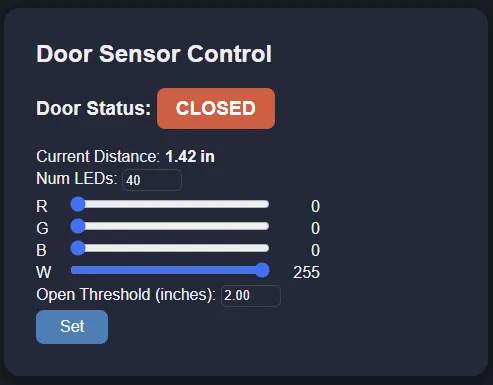 Responsive web control panel showing real-time door status, distance readings, and RGBW color controls
Hardware Setup & Components
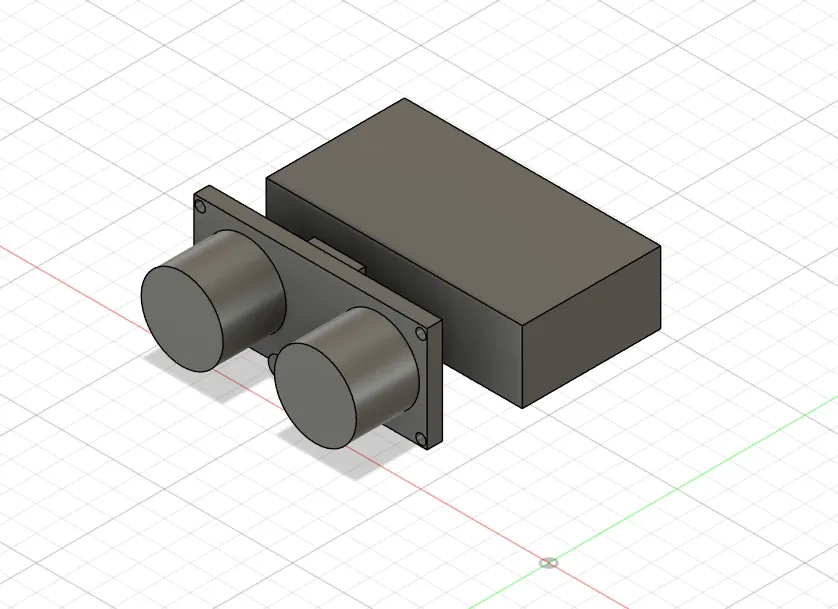 ESP32, HC-SR04 sonar sensor and supporting components
Assembly & Installation
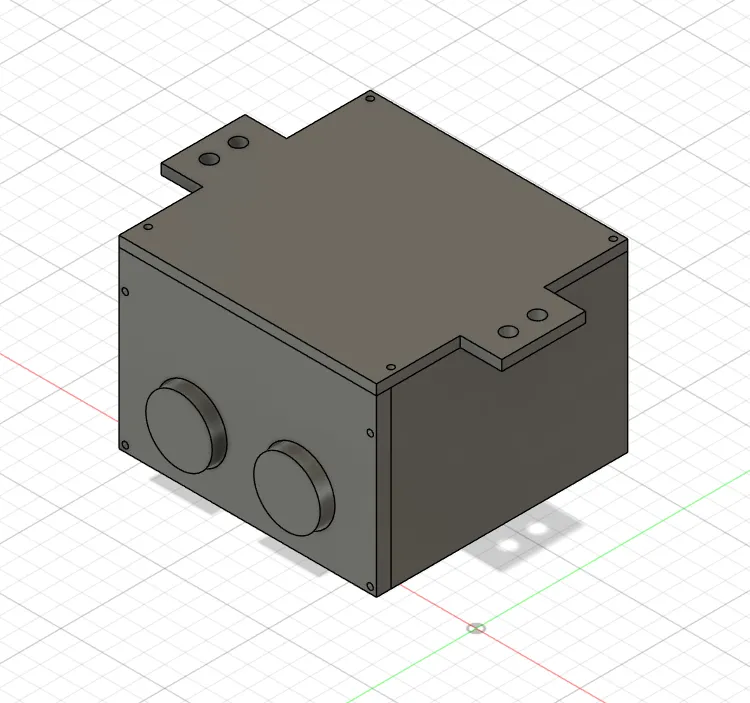 Complete system assembled and ready for cabinet installation
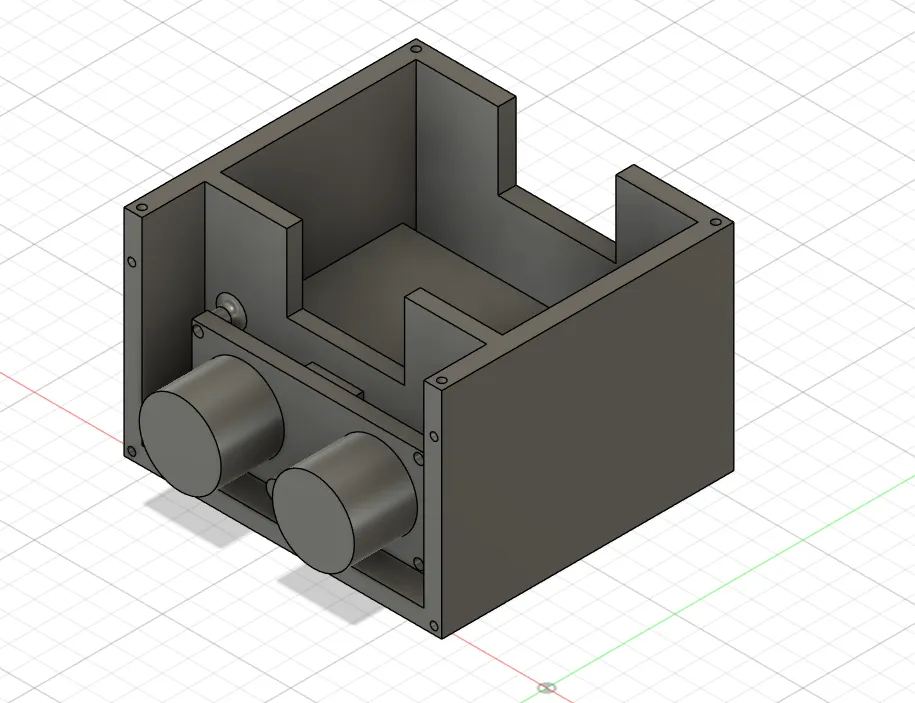 Cabinet installation showing sensor placement and LED strip routing
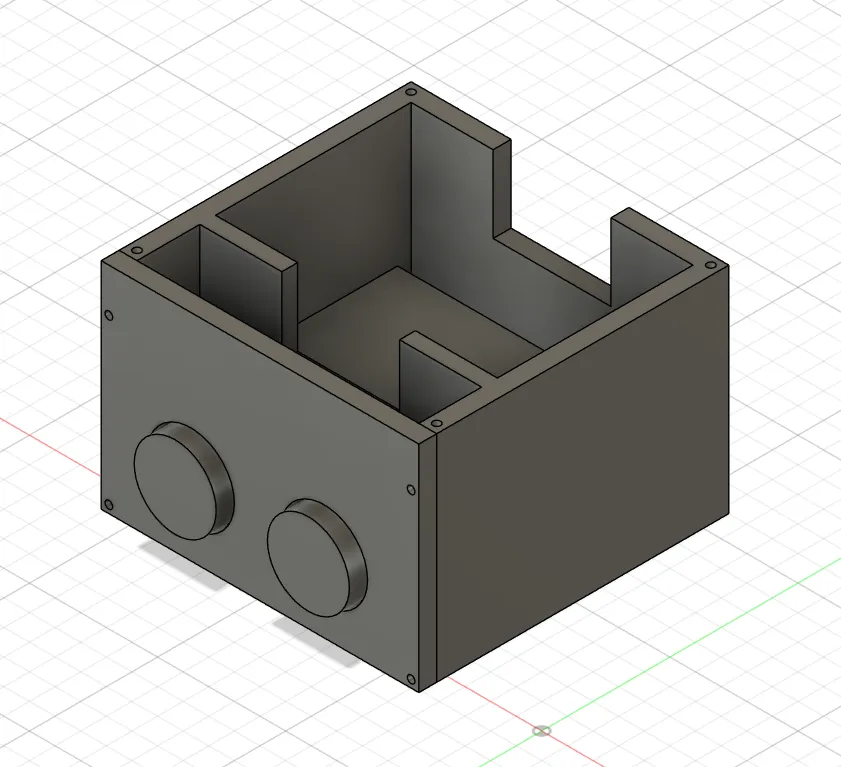 Top-down view of the installed system in cabinet
Shopping & Parts Reference
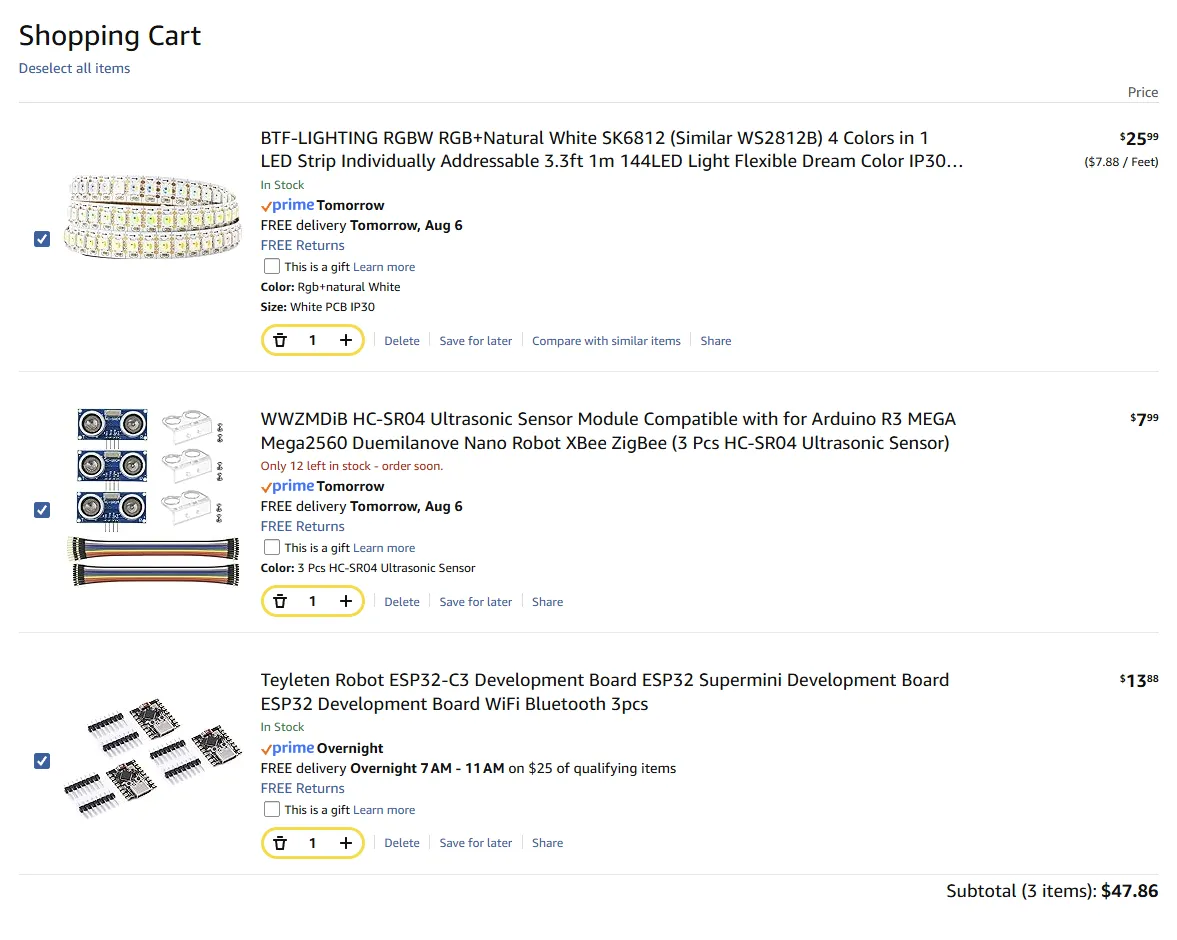 Example Amazon cart showing required components for the build
Parts List & Estimated Cost
| Part | Qty | Approx. Price |
|---|---|---|
| ESP32-C3 Development Board (3-pack) | 1 | ~$13.88 |
| SK6812 RGBW LED Strip (1m, 144 LEDs/m) | 1 | ~$25.99 |
| HC-SR04 Ultrasonic Sensor (3-pack) | 1 | ~$7.99 |
| Jumper Wires & Breadboard | 1 | ~$5 |
| 5V Power Supply (for LED strip) | 1 | ~$8 |
| Total: | ~$39 |
Prices may vary depending on strip length and supplier
Installation & Setup
-
Hardware Assembly
- Connect HC-SR04 sensor to ESP32 (TRIG→12, ECHO→14)
- Wire SK6812 strip data line to Pin 27
- Ensure proper 5V power supply for LED strip
-
Software Configuration
- Update WiFi credentials in code
- Set OTA password for secure updates
- Adjust default LED count and threshold as needed
-
Cabinet Installation
- Mount sensor inside cabinet frame
- Position to detect door opening movement
- Route LED strip along cabinet interior
API Endpoints
GET /→ Main control interfaceGET /status→ JSON status (door state, distance, LED settings)GET /set→ Update LED colors, count, and threshold
Future Plans & Improvements
- Add motion sensor for enhanced detection
- Integrate ambient light sensor for automatic brightness adjustment
- Support for multiple cabinet zones with independent control
- Home Assistant integration via MQTT
- Mobile app for quick control
Get the Code & Follow the Project
GitHub Repo: View the Source Code
Full source code, wiring diagrams, and setup instructions available on GitHub!
← Back to projects